PROJECT ORANGE ELEPHANT
Growing citrus. Supporting farmers. Protecting elephants.
Watch our work
Growing a future we can share.
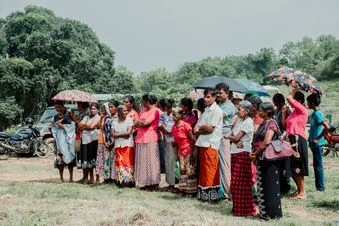
In Wasgamuwa, farming families grow citrus that elephants tend to avoid. Project Orange Elephant connects conservation with livelihoods, helping supplement household income and reduce conflict. Meet the people behind the idea.
Partner story · Spa Ceylon
Joining hands for elephants.
Spa Ceylon has shared its support for Project Orange Elephant and orange-growing communities. Explore the partnership story in their original video.
Watch Spa Ceylon’s video ↗ (opens in a new tab)Carbon sequestration research
Assessment of carbon sequestration in orange trees
Summary
The project aims to address the growing need for climate change mitigation through nature-based solutions by evaluating the carbon sequestration potential of orange plantations while assessing the plantation’s eligibility for carbon credit generation.

Objectives
- To evaluate the carbon sequestration potential of orange (Citrus sinensis) plantations as a nature-based solution for climate change mitigation.
- To assess the potential of the project to generate certified carbon credits for use in voluntary or compliance carbon markets
- To promote sustainable agricultural practices by integrating environmental and economic benefits for local communities.
Measurable Objectives
- To quantify the annual carbon sequestration per hectare from orange plantations over a defined study period using standardized methodologies
- To calculate the total volume of CO₂ equivalent (CO₂e) sequestered and determine the number of potential carbon credits.
- To compare sequestration rates across plantation age classes (e.g., young vs mature trees).
Alignment with Organizational Mission/Strategy
- Environmental Responsibility: Supports the SLWCS’ commitment to climate action and ecological sustainability through carbon offset initiatives
- Community Empowerment: Aligns with efforts to enhance livelihoods by providing farmers with alternative income streams through carbon credit markets.
- Data-Driven Solutions: Contributes to evidence-based decision-making and promotes best practices in land use and agroforestry.
Results & Outcomes
Quantitative Results
Tree Age (Years) | Annual CO2 Sequestration per hectare (Tons) |
0-2 | 512 |
3-5 | 278 |
6 -above | 206 |
Qualitative Outcomes
The project has led to increased awareness and capacity among local communities, with a growing interest in sustainable land-use for both environmental and economic benefits. It fostered stronger collaboration between researchers, funders, and communities, and initiated discussions on linking agriculture with environmental financing, such as carbon markets.
Key strategic insights included recognizing the economic potential of integrating carbon credit mechanisms into farming and exploring certification under standards like Gold Standard and VCS.
The project delivered broad impacts
- Social: Promoted climate-smart agriculture awareness.
- Economic: Potential to open up revenue opportunities through carbon credits, benefiting rural livelihoods
- Environmental: Contributed to CO₂ reduction, biodiversity, and soil health.
- Organizational: Strengthened alignment with sustainability goals and improved capacity for green initiatives
- Next steps involve piloting carbon credit registration and engaging communities as data contributors, beneficiaries, or partners in training, outreach, and sustainable farming programs
Join us in Sri Lanka!
We offer individuals and families a rare opportunity to work alongside scientists, conservationists, educators, community partners, and local villagers deep within the heart of beautiful Sri Lanka. Whether you’re traveling alone or with a group, for fun or for business, our programs offer a wide variety of options to meet your needs and fulfill your interests while helping to support our critical conservation and research work.